How to control the waste during the cutting process of TPE film? A solution for reducing raw material waste in overseas customer production Medical TPE elastic film cutting waste control solution: Helps overseas processing factories reduce raw material scrap costs
How to control the waste during the cutting process of TPE film? A solution for reducing raw material waste in overseas customer production
Medical TPE elastic film cutting waste control solution: Helps overseas processing factories reduce raw material scrap costs
For medical device manufacturers with their own extrusion and cutting production lines overseas, when processing TPE Stretch Film rolls, they often encounter edge waste, thickness deviation, and film scratches, which increase the overall production cost. The waste comes from four dimensions: raw material formula, roll factory specifications, cutting equipment parameters, and workshop cleanliness control. As a Custom TPE Film Supplier, thcoo optimizes the raw material at the factory source, provides cutting process guidance, and reduces the processing scrap rate for customers.
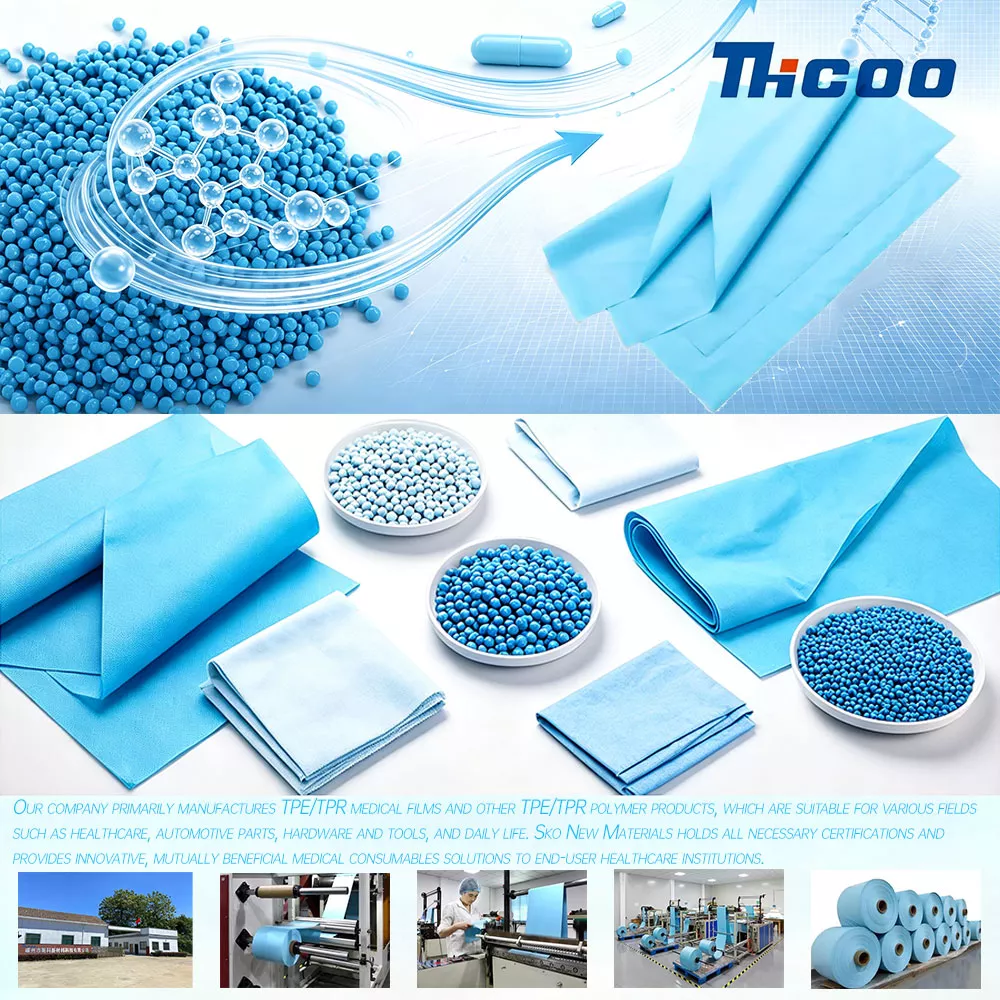
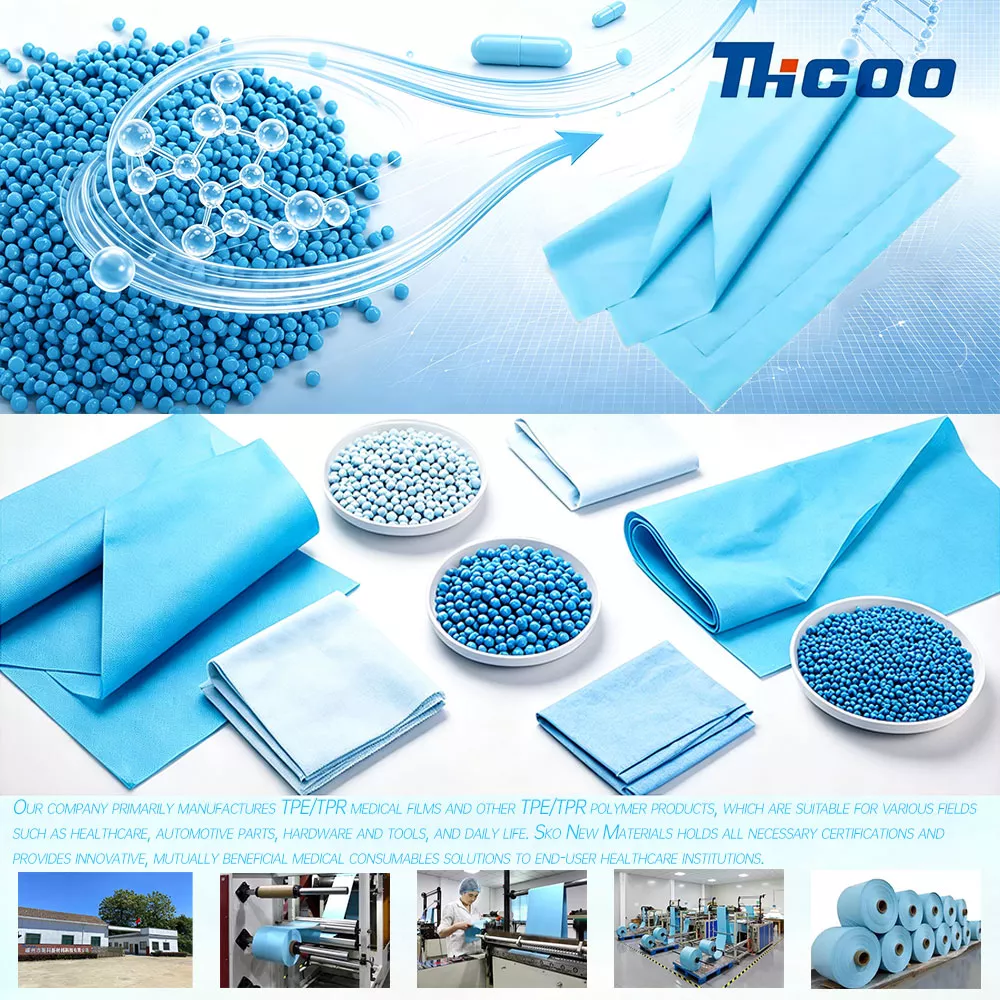
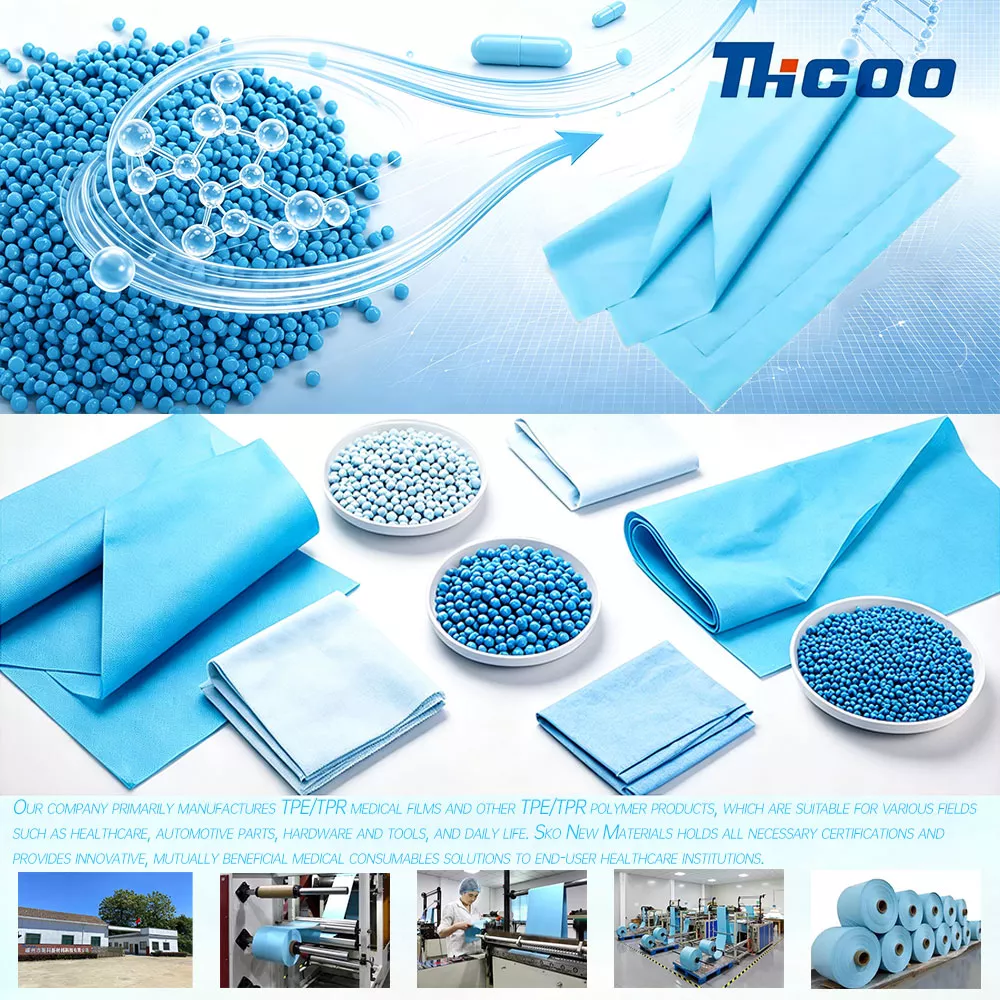
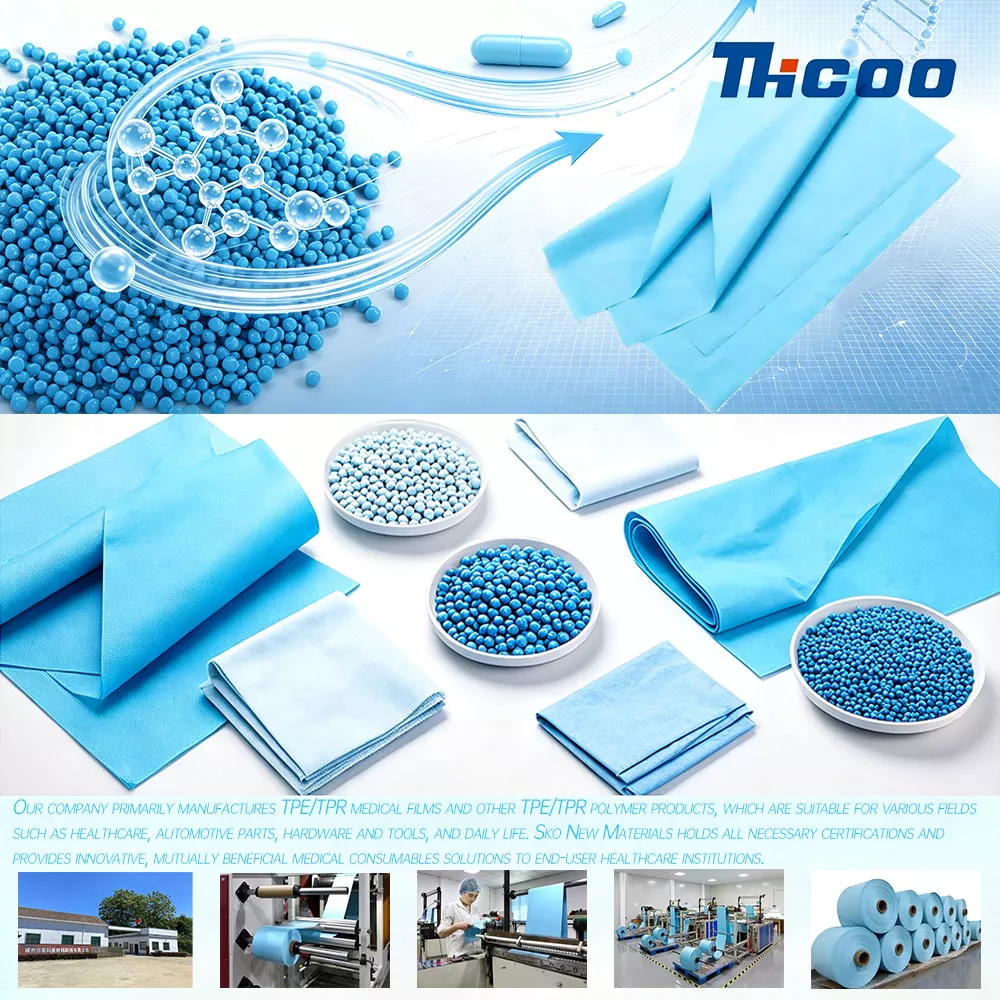
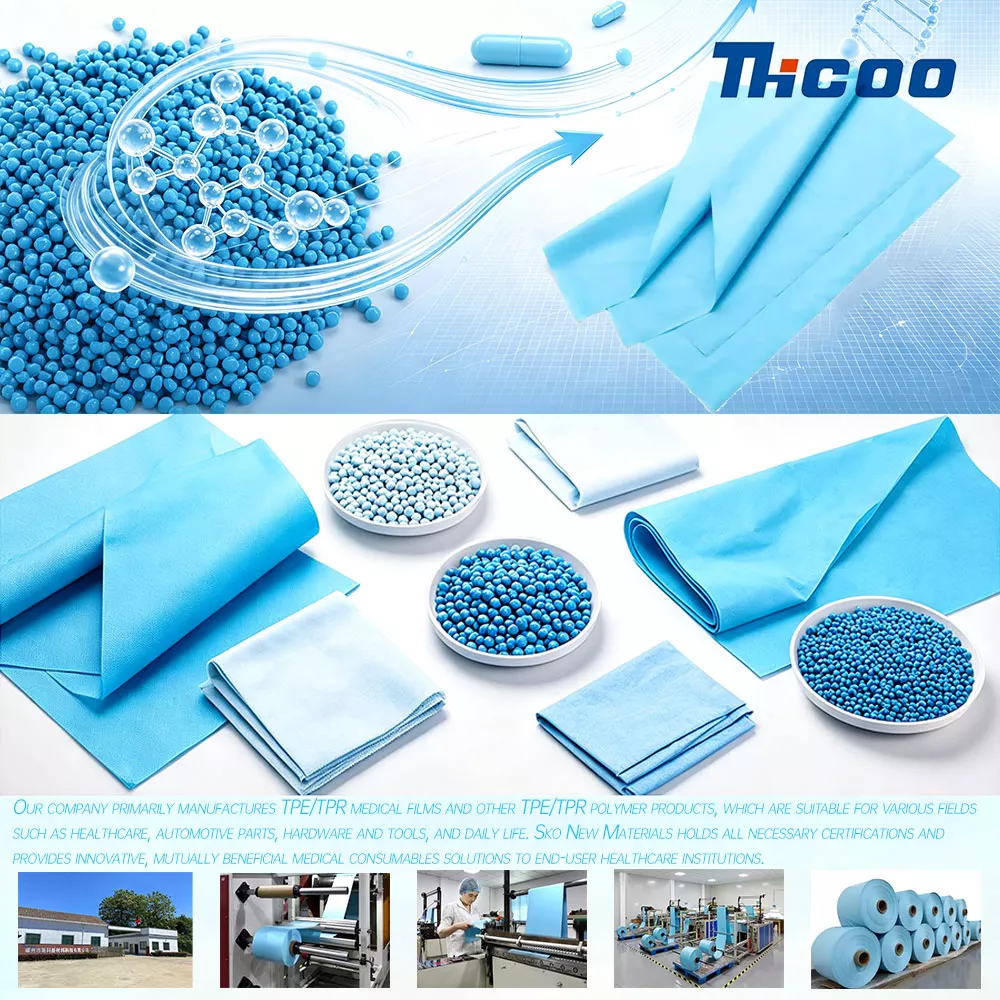
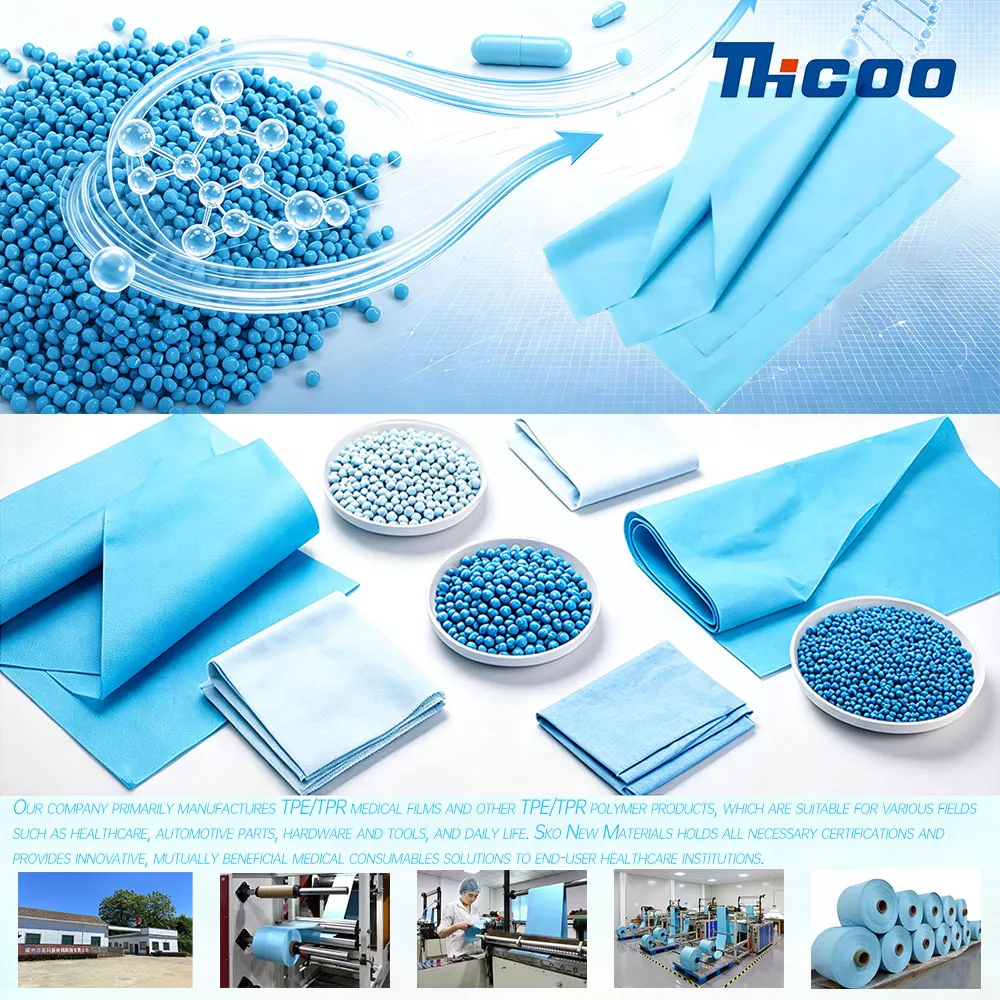
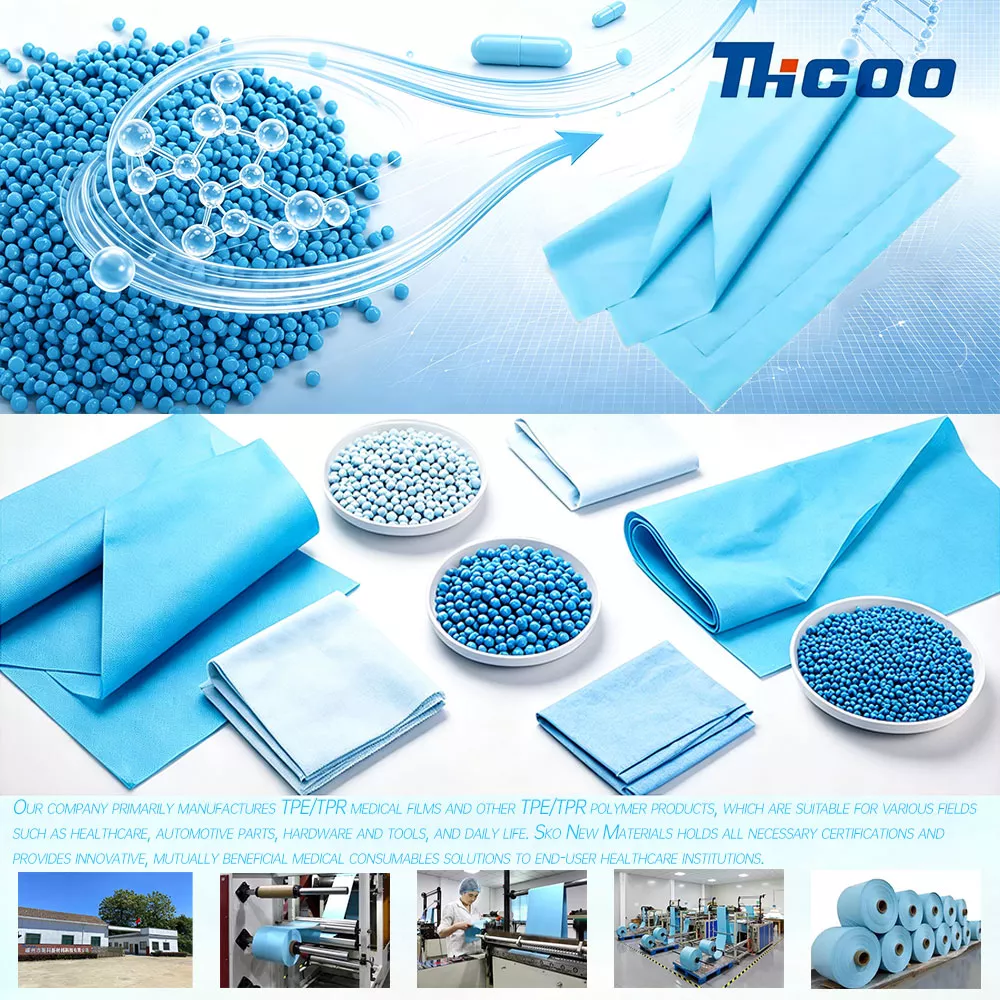
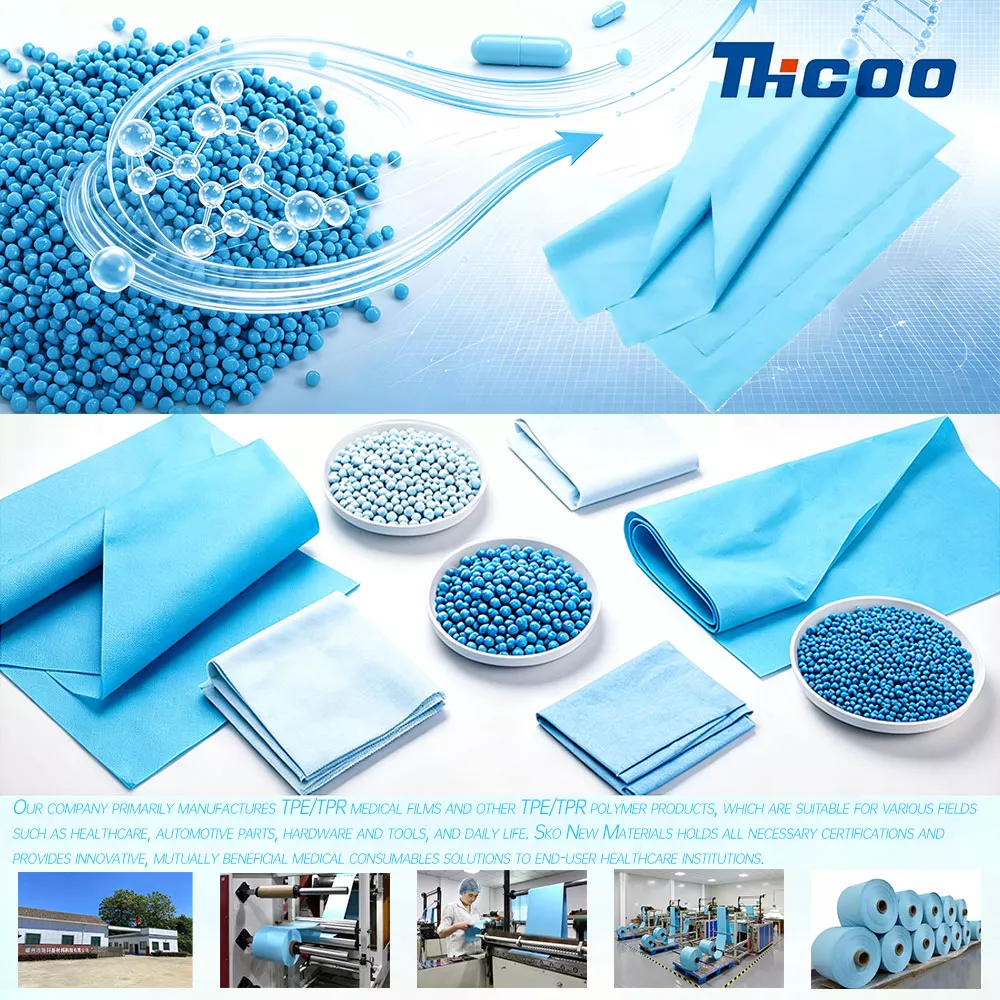
Optimizing the waste at the raw material roll source, when producing Custom Size Surgical Drape TPE Film, thcoo matches the customer's cutting equipment standard width in advance, reserves a very small cutting margin, to avoid the large number of edge waste caused by multiple cuts of regular wide rolls. Transparent Thin TPE Film reduces the core eccentricity problem of the roll core, eccentric rolls are prone to single-sided thickness deviation and can only be scrapped. High Elastic Blue TPE Film for Surgical Drape has a flat end face without uneven edges, reducing the damage to the cutting tool and the film. The raw material formula is optimized to reduce processing scrap, Skin Friendly TPE Film with low SEBS TPE particles produces a film surface without an oily layer, making it less prone to slipping and deviation during the cutting process; excessive oil content in TPR film has insufficient friction force and causes positioning deviation during cutting, resulting in a large number of waste rolls. Lint-free Medical Grade Film has no black spot impurities, reducing the loss of cutting mid-process by removing defective sections; Eco-friendly Recyclable Thermoplastic Elastomer Pellets are recyclable, the cutting scraps can be re-melted and granulated to produce films, achieving secondary utilization to offset the loss cost.
Specialized control of functional film cutting: Waterproof Anti-static TPR Film reduces static in the cutting workshop, static adsorption of dust will cause local defects and scrap; Anti-bacterial Medical Grade TPR Elastic Film has a dust-free environment during the cutting process, avoiding contamination of the entire roll by bacteria. Weather Resistant TPE Raw Material is vacuum-sealed at the factory for export, customers do not need to dry the rolls before cutting, saving drying loss.
Complementary cutting process technical guidance: thcoo's foreign trade technical team provides cutting tool rotational speed, tension parameters suitable for film thickness and hardness, excessive tension causes the film to stretch and thin and break, insufficient tension causes the roll to wrinkle and be scrapped. For customers with injection molding TPE Raw Material for Medical Device, they are also provided with the particle granulation edge and corner material recovery process to achieve raw material closed-loop utilization. The supply mode is adapted to the customer's slicing requirements. For large-volume orders of "China Factory Direct Supply Medical TPE Film", custom-made standard width rolls for the customer's specific equipment can be provided, minimizing the slicing waste to the greatest extent. For medium and small-sized manufacturers, "Bulk Supply Medical Elastic PE Film Roll" is offered in standard ready-made rolls, along with operation manuals for reducing slicing losses. Wholesale TPE TPR Pellets for Medical Consumables offer one-stop purchasing, and the film scraps can be directly recycled into the particle granulation production line.
Key points for avoiding procurement losses: Not informing the supplier of the width of the slicing equipment, purchasing large-width rolls, resulting in a high proportion of edge waste; choosing high-oil-content and low-price TPR films, causing slippage and offset during slicing and resulting in scrap; the rolls have no vacuum packaging, causing dust contamination during transportation, and the loss of defective sections during slicing increases. Provide the slicing equipment parameters before placing an order, and the factory customizes the roll specifications accordingly.
Direct slicing losses directly determine the profit of the customer's end product. Managing from multiple dimensions such as raw materials, roll specifications, and process guidance can significantly reduce the proportion of raw material scrap. thcoo customizes rolls based on the slicing equipment parameters of overseas customers, providing complete processing process guidance and reducing the processing losses of medical TPE films.